







DEAF AWARENESS WEEK 4-10 MAY 2026
5 min read
Deaf Awareness Week – Are You Really Listening?
Because for 11 million people in the UK, that question matters more than you know.
Deaf Awareness Week 2026: “Right to Understand – Together, We Break Barriers.” A thought from Burleys about communication, care, and the loneliness that comes when no one adjusts.
Think about the last time you were in a noisy room and couldn’t quite follow the conversation. The effort of asking someone to repeat themselves. The moment you smile and nod — not because you understood, but because it’s easier than saying you didn’t. Now imagine that being every day.
For around 11 million people in the UK who are deaf or living with hearing loss, that experience is constant. The coffee morning where the background noise makes every voice blur into one. The doctor’s appointment where a mask means you can’t lip-read. The family dinner where you catch every third sentence and laugh along anyway, because explaining feels like too much.
This year’s Deaf Awareness Week theme — “Right to Understand — Together, We Break Barriers” — speaks to something we see every single day in the homes we work in. A huge number of the people Burleys cares for live with some degree of hearing loss, often age-related, often untreated, and often quietly accepted as simply part of getting older.
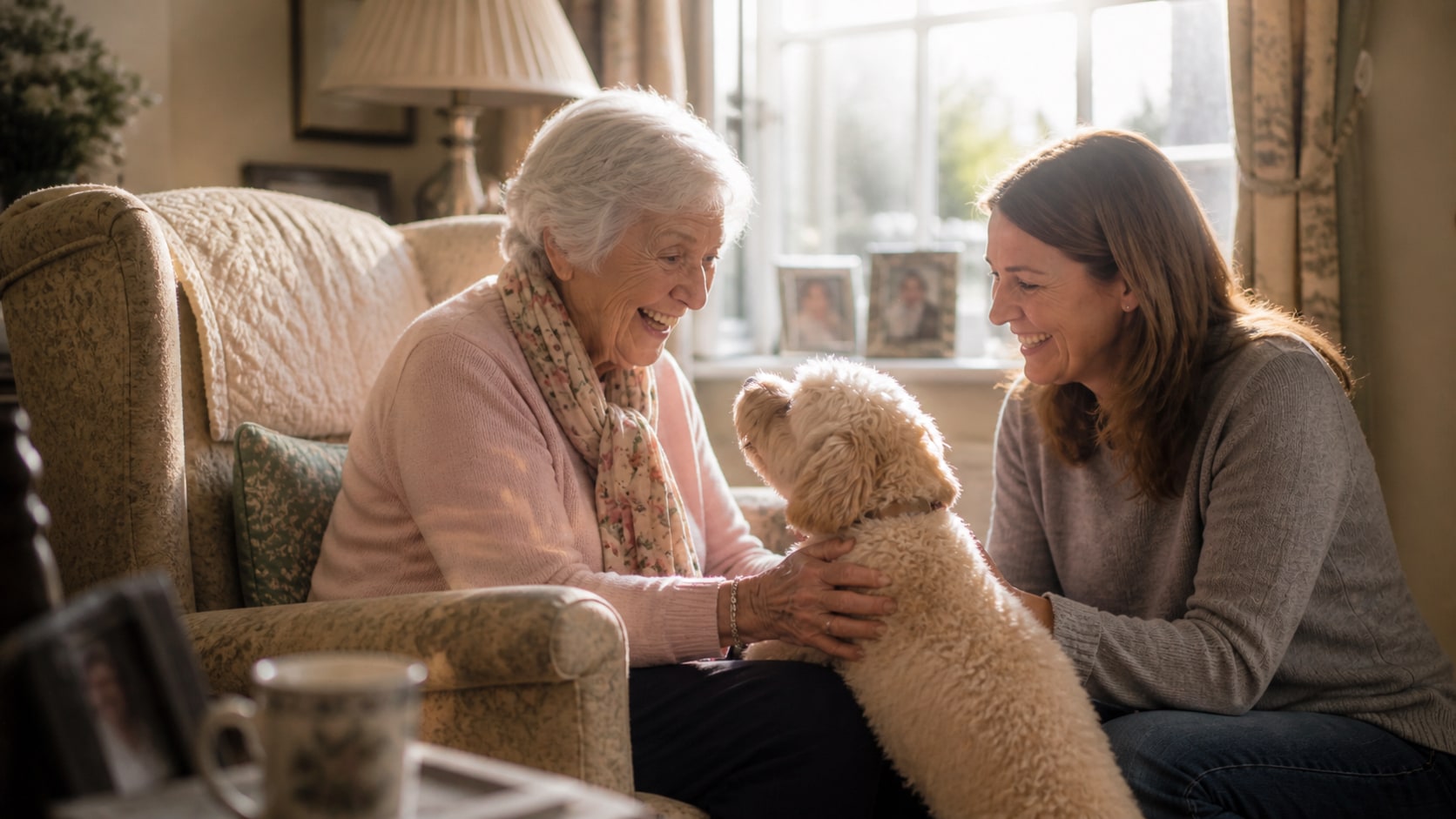
“It isn’t the hearing loss that isolates people. It’s the gap it creates between them and the world — a gap that grows wider every time no one adjusts to bridge it.”
People in the UK are deaf or living with hearing loss.
Over 800,000 are severely or profoundly deaf. Age-related hearing loss affects around 70% of people over 70 — yet many go years without diagnosis.
Age-related hearing loss creeps in gradually. First the television gets louder. Then phone calls become an effort. Then group conversations feel impossible. And slowly, without anyone quite noticing, the world becomes a quieter and lonelier place — not because people stopped visiting, but because being in a room with others no longer feels like being with them.
We’ve sat with clients who haven’t told their families how isolating mealtimes have become. Who nod through conversations they can’t follow. Who stopped going to the day centre they loved because the acoustics were too hard. The hearing loss didn’t do this to them. The lack of awareness around them did.
Communication is care. If a carer can’t communicate well with the person they’re supporting, the care itself is diminished — however kind the intentions.
WHAT WE ASK OUR CARERS TO DO – SMALL THINGS, SIGNIFICANT DIFFERENCE
Face the person directly – always. Many people with hearing loss rely on lip-reading more than they realise.
Reduce background noise first – turn the television off before speaking. Don’t try to hold a conversation over the washing machine.
Speak clearly, not loudly – clear, unhurried speech at a normal volume with the mouth visible is almost always more effective than shouting.
Never finish their sentence or move on too quickly – give the time needed. A moment’s patience communicates respect in a way no words can.
Communication-aware care
Our carers are briefed on deaf awareness – facing clients, reducing noise, speaking clearly and patiently at every visit.
Companionship that adapts
We take the time to find the communication style that works for each person — written notes, visual cues, or simply slowing down.
Familiar, low-barrier environment
Home care means the environment is one the client controls — quieter, familiar, without unpredictable noise.
Communication-aware care
We help families understand how to communicate better too — small adjustments that make a real difference to connection.
If someone you love has hearing loss, please don’t wait for them to ask for adjustments. They probably won’t. Most people with hearing loss adapt silently and absorb the isolation as the price of not being a burden. They deserve better than that.
This Deaf Awareness Week, the simplest act of awareness you can offer is turning to face someone before you speak. It costs nothing. It says everything.
Do you or someone you love live with hearing loss?
What’s the one thing you wish more people understood — or did differently? Your answer might be exactly what someone else needs to read today.
If someone you love could benefit from a carer who truly listens, we’d love a conversation. Hampshire, Dorset & Wiltshire.
Care that communicates – properly, patiently, and with real respect.
If someone you love could benefit from a carer who truly listens, we’d love a conversation. Hampshire, Dorset & Wiltshire.