









LEARNING DISABILITY WEEK 15-21st JUNE 2026
3 min read
Do you see me?
Because 1.5 million people are asking that question. Every single day.
Learning Disability Week 2026 — on Mencap’s powerful theme, the people behind the statistics, and what truly seeing someone looks like in care.
Three words. A question, really. Do you see me? Not the diagnosis. Not the support plan. Not the things I can’t do or the ways I need help. Me — the person who laughs at the same things every time, who knows exactly how they like their tea, who has a favourite song and a favourite chair and opinions about biscuits.
Mencap’s theme for Learning Disability Week 2026 is “Do You See Me?” – and it lands precisely because the answer, for too many people, too much of the time, is no. Nearly half of British adults cannot correctly define what a learning disability is. And when you don’t understand something, it’s very hard to truly see the person living with it.
A learning disability affects the way someone’s brain processes and learns new information. It is not a mental health condition. It is not a temporary state. It is a lifelong part of who someone is — as much a part of their identity as anything else. And the 1.5 million people in the UK living with a learning disability are as varied and remarkable as 1.5 million people can be.
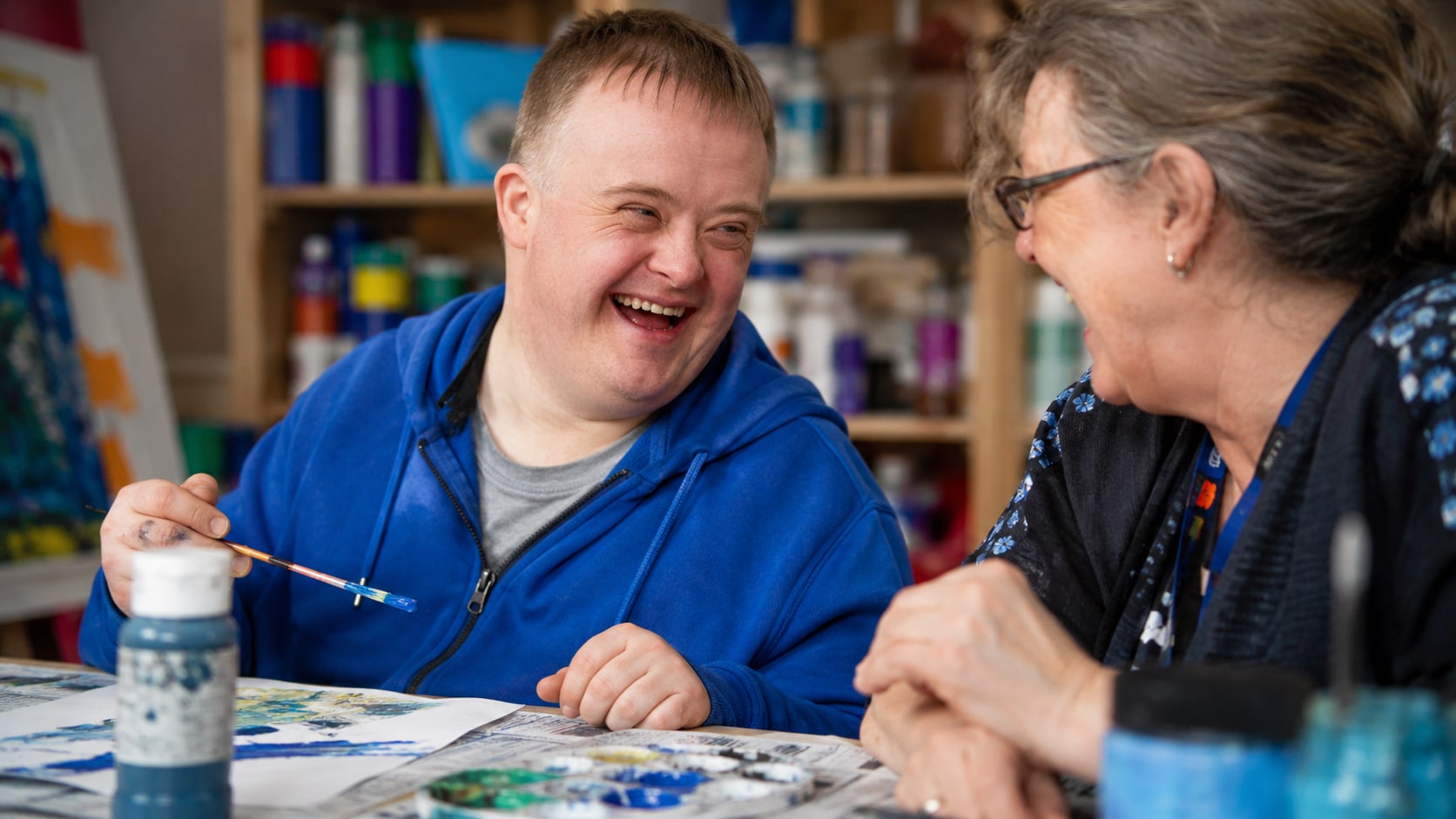
The label tells you almost nothing. The person tells you everything – if you take the time to look properly.
People with a learning disability spend less than one hour outside their home on a typical Saturday.
Only 26.7% are in employment – despite 86% wanting a paid job. Over 2,000 are in inpatient mental health settings who shouldn’t be there.
These statistics are the direct result of a society that doesn’t see people with learning disabilities properly. That confuses their disability with their potential. That builds systems around what they can’t do, rather than environments that let them show what they can.
At Burleys, we try to answer Mencap’s question – “Do you see me?” — through the way we provide care. Every single visit.


WHAT SEEING SOMEONE PROPERLY LOOKS LIKE IN CARE
Taking the time to learn how someone communicates – not assuming that because they can’t use conventional language, they don’t have something to say.
Building a care plan around who they are, not just what they need – their interests, their routines, the things that make them feel like themselves.
Never talking over someone to their carer or family member. Speaking directly to the person in front of you, always.
Celebrating small victories as the full victories they are — because for someone with a learning disability, getting through a difficult morning is genuinely remarkable.
Burley’s approach to supporting people with learning disabilities
Person-first always
Every care plan starts with who the person is – not their diagnosis. Their preferences, communication style, and what a good day looks like for them.
Consistent carers
Familiarity matters enormously for people with learning disabilities. We work to maintain
consistency so carers become known, trusted faces.
Support at home
Keeping people in their own environment – with their own routines and their own
space – supports independence and dignity in a way residential care rarely can. Learn more
Family partnership
Families are experts on the people they love. We work alongside them, learn from them, and keep them informed at every stage.
This Learning Disability Week – if you have a family member, friend, or colleague with a learning disability – take a moment to answer Mencap’s question honestly. Do you see them? Not the label. Not the limitations. The person, in full.
And if you’re a family looking for home care support that truly does – we’d love to talk.
Do you love someone with a learning disability?
Tell us one thing about them that the world should know. Something they do, something they love, something brilliant that doesn’t fit the stereotype.
Let’s celebrate them properly.
Care that truly sees the person – not just the diagnosis.
If you’re looking for home care that takes a genuinely person-centred approach for someone with a learning disability, we’d love a conversation. Hampshire, Dorset & Wiltshire.